
What to expect when you submit an apartment maintenance request in Fort Worth
By Sofia Delgado · Updated 2026-06-08
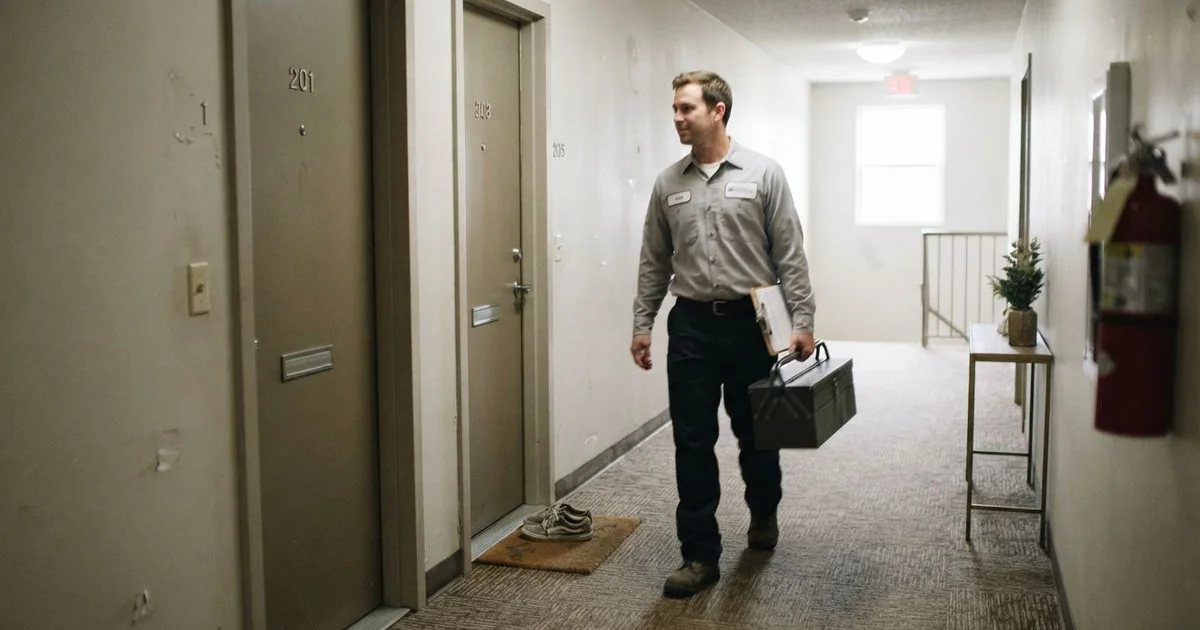
Maintenance responsiveness is one of the most common threads in resident feedback across Greater Fort Worth apartment communities, mentioned far more often than amenities, floor plans, or even rent itself. It shows up as a top praise point at some properties and a top complaint at others, sometimes within the same review set after a management change. Knowing what a normal maintenance process looks like, before you sign, helps you separate an outlier bad week from a pattern you will be living with for a year.
How the request actually gets filed
Almost every community in Fort Worth, Arlington, and Grapevine now routes maintenance through a resident portal app rather than a paper slip under the office door. You log in, pick a category (plumbing, electrical, appliance, HVAC, pest, other), describe the issue, and often attach a photo. Some properties let you flag whether you want maintenance to enter while you are out, which matters if you have pets.
For anything urgent, a phone call to the leasing office or a 24-hour emergency line still gets you faster attention than a portal ticket sitting in a queue. Save that number to your phone the day you move in, not the day you need it.
What counts as a normal response time
There is no single legal standard for how fast non-emergency repairs must happen, but the pattern across well-run communities is fairly consistent.
| Issue type | Typical response window | Example |
|---|---|---|
| Emergency | Same day, often within hours | No heat in winter, active leak, no working smoke detector |
| Urgent | 24 to 48 hours | No hot water, broken lock, appliance not working |
| Routine | 2 to 5 business days | Dripping faucet, squeaky door, minor drywall repair |
| Cosmetic | Scheduled, sometimes weeks out | Paint touch-up, non-urgent caulking |
If a property consistently misses even the routine window by a wide margin, that is worth noting before you renew, not just before you sign.
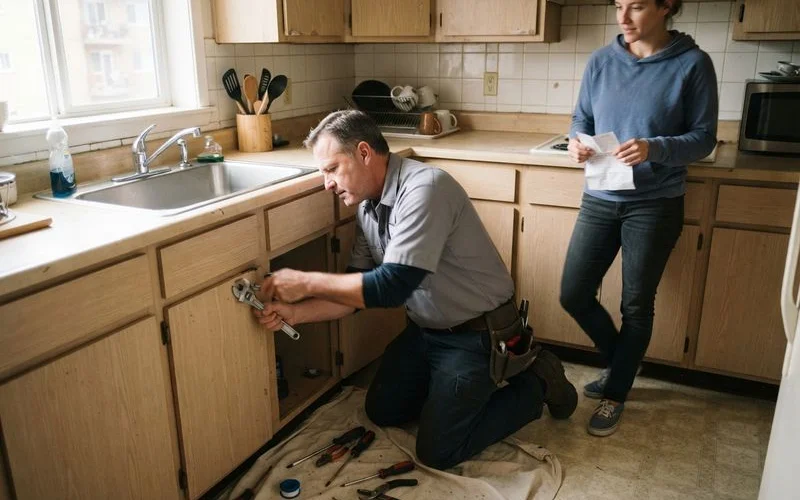
When slow maintenance becomes a real red flag
A single delayed repair during a busy week is not a pattern. What is worth taking seriously:
- The same issue gets reported more than twice without a permanent fix.
- Elevator, gate, or pool equipment stays broken for months rather than days.
- Staff stop responding to portal tickets and phone calls entirely.
- A serious issue, mold, a broken exterior door lock, standing water, sits unaddressed for more than a few days.
Recurring mechanical failures and unresponsive front offices show up often enough in resident feedback that they are worth asking about directly on a tour, not just assuming will not happen to you.
Questions worth asking before you sign
Ask the leasing office directly: how do residents submit maintenance requests, is there a 24-hour emergency line, and what is the typical turnaround for a non-urgent repair. A leasing agent who answers specifically (“usually within two days, and same day for anything urgent”) is a better sign than a vague “pretty quick.” You can also ask how long the current on-site maintenance staff has been with the property. High turnover in that role often tracks with slower response times.
We score every community we list using a published rubric that weighs resident sentiment, not just star ratings, so recurring maintenance complaints pull a score down even when the average rating still looks decent. You can see exactly how that works on our methodology page. Touring deserves the same scrutiny before you sign; see how the Fort Worth apartment touring and application process usually unfolds.
How a management change affects the pattern
Maintenance quality is not always fixed for the life of a property. A change in the management company or a turnover in the on-site maintenance team can shift response times noticeably within a matter of months, for better or worse. If you are reading older reviews that praise a property’s maintenance, cross-check them against the most recent handful to make sure the pattern still holds. The reverse is also true: a property that had a rough stretch under one manager can genuinely improve after a change, so do not write off a community based solely on complaints that are a year or more old.
The bottom line
Maintenance responsiveness varies more by property than by price point in Greater Fort Worth. A budget-friendly complex with an attentive maintenance team will beat a luxury building with a chronically broken elevator every time. Read recent reviews specifically for maintenance mentions, ask pointed questions on your tour, and confirm the emergency contact process before move-in day. For the full directory of communities we track and score, start from the home page.
FAQ
- How fast should an apartment complex respond to a maintenance request?
- Routine issues like a dripping faucet or a slow drain are usually addressed within 24 to 72 hours. Anything that affects habitability, no heat, no water, a broken lock, should get same-day attention at a well-run community.
- Can I withhold rent if maintenance ignores my request in Texas?
- Texas law sets a specific notice and repair process before a tenant can pursue remedies like repair-and-deduct, and it does not allow simply withholding rent. This is general information, not legal advice, so talk to a tenant rights organization or attorney before acting on a specific repair dispute.
- Does every apartment complex have 24/7 emergency maintenance?
- Most mid-size and larger communities do, at least for true emergencies like flooding or no air conditioning in summer. Smaller or independently owned properties sometimes only offer daytime coverage, so it is worth confirming during your tour.
- Should I submit maintenance requests in writing?
- Yes. A phone call is fine for something urgent, but follow up through the resident portal or email so there is a timestamped record if the issue drags on or affects your deposit later.